SLR hosts panel discussion on automated shutdown on demand and biodiversity risk mitigation for wind energy
- Post Date
- 17 July 2026
- Read Time
- 4 minutes
The success of an onshore wind projects is rarely defined by a single issue, but by a complex set of interconnected ‘critical paths’. This includes grid connection and network capacity, planning and environmental approvals, community and stakeholder acceptance, ecology and biodiversity considerations, engineering and constructability constraints, and land access and tenure arrangements.
In this Onshore Wind Critical Path Thought Leadership Series, our technical teams will explore these topics in detail, highlighting challenges and presenting potential solutions.
Articles in the series so far:
- Is ecology now as critical as engineering for onshore wind approvals in Australia?
- Stakeholder engagement: A critical path for onshore wind success (part one)
- Stakeholder engagement: A critical path for onshore wind success (part two)
- Addressing ground constraints in onshore wind projects
- Wind turbine noise: A critical path to consent
The onshore wind industry continues to accelerate across the globe, bird collisions with wind farms are a real and measurable challenge, particularly for birds of prey and other species of conservation concern.
SLR recently convened a diverse panel of experts representing the interests of international financial institutions, onshore wind developers, ornithologists, and leading technology providers to discuss this topic as one of the sector's most significant critical paths to sustainable wind farm development and operation. Moderated by SLR’s Stuart Heather-Clark, the session focused on the topic of automated shutdown on demand (SDOD) and how this technology can be a key mitigation strategy in addressing biodiversity risk. This article provides insight into the key discussion points from the event.
What is automated shutdown on demand (SDOD)?
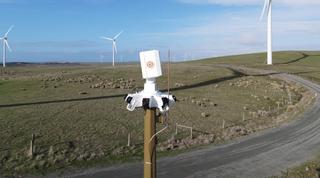
Automated SDOD systems are designed to reduce bird collision risk by detecting birds approaching operating wind turbines and initiating temporary shutdowns when predefined risk thresholds are met. These systems are increasingly being considered as part of a broader biodiversity management strategy, alongside careful site selection, project design, operational monitoring, and other mitigation measures.
While the fundamental concept is straightforward, successful implementation depends on a range of factors, including site-specific conditions, species behaviour, topography, and operational requirements.
Investor expectations and biodiversity performance
A major focus of the panel discussion was the evolving role of investors and lenders in driving biodiversity outcomes. The consensus was that a project’s ability to demonstrate measurable biodiversity risk reduction is becoming a progressively important part of achieving project financing. For higher-risk developments, SDOD is being increasingly viewed as a key component of biodiversity risk management, particularly where significant collision risk remains after avoidance and minimisation measures have been implemented.
The discussion also highlighted the importance of integrating biodiversity considerations early in project planning and financial modelling, ensuring that mitigation measures, monitoring requirements, and operational implications are understood throughout the project lifecycle.
Observer-led versus automated systems
The panellists explored how observer-led systems can create local employment opportunities and provide valuable operational oversight, while automated systems offer continuous monitoring capabilities and are benefiting from rapid advancements in AI and detection technologies. There was agreement that there is no single solution suitable for every site, and that hybrid approaches may provide the most effective outcome in certain environments. Rather than competing technologies, observer-led and automated systems are increasingly being viewed as complementary tools that can be deployed according to species risk profiles, operational needs, and project-specific requirements.
The growing importance of data and monitoring
SDOD systems can generate a significant volume of ecological data, and the panellists discussed how this creates more opportunities to better understand bird behaviour, migration patterns, and site-specific risk factors. In addition, advances in AI and data analytics could further enhance SDOD systems, strengthening the industry's ability to predict and manage biodiversity risks in the future.
Again, the panel highlighted the value of applying these technologies earlier in the project development cycle, where improved data collection could support more informed site selection, risk assessment, and project design decisions.
How SLR can help
As renewable energy deployment continues to accelerate, stakeholders are increasingly seeking practical solutions that navigate the balance between clean energy generation and biodiversity protection. Contact our team for more information on SDOD and how SLR supports onshore wind clients to understand and mitigate biodiversity risks in their projects.
Recent posts
-
-
Data centre backup power may be temporary, but its air quality impacts aren’t
by Ben Turner
View post -